Georgetown is best approached through its timber architecture, markets, museums and food, with reliable transport linking each part of the day. Start with St. George’s Cathedral and the historic center, add a guided market visit, then choose a museum or garden according to your interests. Two or three days allow a more thoughtful introduction than a hurried stop between airport and rainforest.
Guyana’s capital sits on South America’s Atlantic coast and has strong cultural connections with the Caribbean. English is the official language, but familiar words do not mean familiar travel conditions. Heat, rain, uneven pavements and security considerations influence how to explore. Use this guide to select experiences, then confirm access and arrange the practical details with a reputable local operator.
The essential city orientation
| Question | Planning answer |
|---|---|
| Main interests | Architecture, food, museums, markets and urban history |
| Suggested time | Two to three days, plus separate time for interior travel |
| Currency | Guyanese dollar; clarify the currency in every quote |
| Airports | Check whether your booking uses Cheddi Jagan or Eugene F. Correia |
| Getting around | Prearranged reputable taxis and guided visits |
| Weather preparation | Lightweight clothes, rain protection and flexible afternoons |
| Important distinction | Kaieteur Falls is a separate excursion, not a city walk |
The Guyana Tourism Authority’s city overview is a useful introduction to the capital’s architectural and cultural identity. The recommendations below are a newly written replacement at the historical URL, not a recovered copy of the original article.
Begin with St. George’s Cathedral
St. George’s Cathedral is a defining part of Georgetown’s skyline and an important introduction to its wooden architecture. Visit with attention to the structure, the surrounding streets and its continuing religious purpose. Check public visiting arrangements in advance, especially if a service or special event may affect access.
A guide can help explain how buildings respond to the tropical climate, rather than leaving the experience at a photograph of the exterior. Look for shade, ventilation and the relationship between timber construction and maintenance. If the interior is unavailable, appreciate the building from an appropriate public area. Avoid interrupting worship or assuming that every part of an active cathedral is open for visitors.
Read the city through its buildings
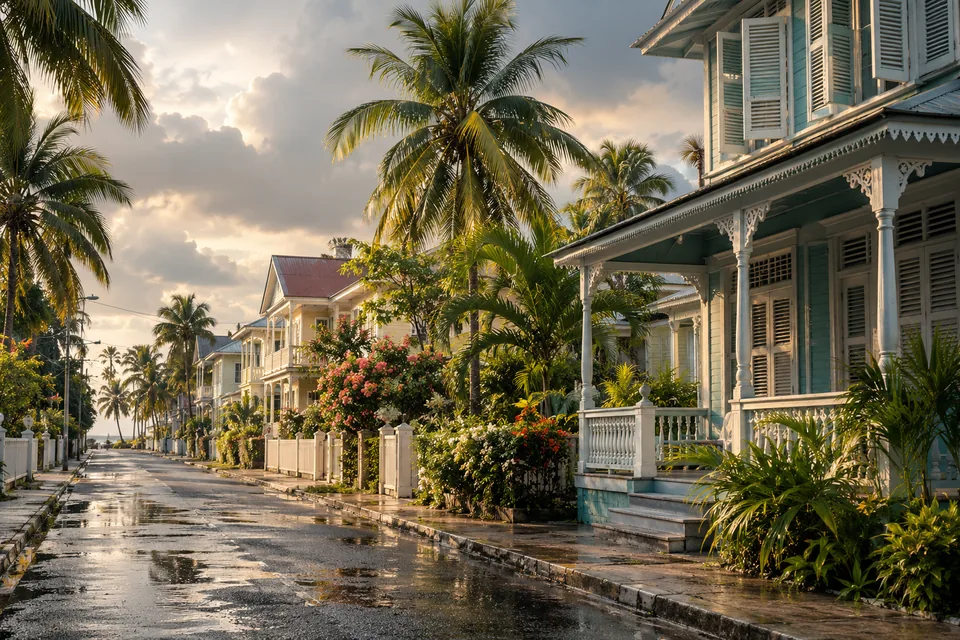
Georgetown’s built environment rewards a slow, informed look. Verandas, shutters and raised structures tell a story about climate as well as colonial influence. Choose a guided architecture-focused route that discusses the people who built, maintained and used these places. The tourism authority’s culture resources place the city’s buildings within a wider cultural setting.
Do not assume a beautiful historic building is currently open, restored or safe to enter. Ask about the status of sites such as City Hall before arranging your day around an interior visit. Public exteriors can still be meaningful stops. A good walk connects urban history with contemporary life, including the costs and practical challenges of preserving timber buildings in a humid coastal city.
Visit Stabroek Market with local guidance
Stabroek Market’s clock tower is a recognizable city landmark, but the surrounding area requires careful planning. Visit with a reputable guide, keep valuables discreet and focus on the working market rather than displaying expensive equipment. The FCDO’s Guyana safety advice identifies significant crime risks, including around Stabroek Market.
Discuss the route and transport before you go. Buy from traders whose products interest you, ask permission for close photographs and keep pathways clear. A guide can introduce ingredients and explain shopping customs without turning the market into a staged performance. If local advice suggests conditions are unsuitable on your intended day, choose another food or craft experience instead of forcing the visit.
Explore food through a guided tasting or market visit
Guyanese food reflects the country’s many communities and histories. Rather than trying to sample everything in one sitting, choose a guided tasting, a restaurant with a clear menu or a market visit focused on ingredients. Ask about dishes such as pepperpot, cook-up rice and roti in context: recipes and availability vary, and one meal cannot represent every household.
Explain allergies and dietary needs clearly before ordering. A vegetarian-looking dish may include meat stock, fish or another ingredient you avoid. Ask about spice rather than assuming it can always be adjusted after cooking. For a relaxed afternoon, make lunch the central activity and pair it with one nearby visit. This is often more satisfying than crossing the city repeatedly between unrelated attractions.
Choose a museum for context
The Guyana National Museum can provide an introduction to the country beyond the capital. The Walter Roth Museum of Anthropology is another option for travelers interested in Indigenous histories and material culture. Verify current public access, opening arrangements and whether a guide is available. Do not rely on a copied schedule from an old article.
Enter with questions rather than only a list of objects to see. How are communities represented? Which voices explain the collections? What distinguishes coastal life from the interior? Keep photography within the museum’s rules and avoid treating cultural objects as decorative curiosities. A museum visit can make later travel more thoughtful, particularly when it encourages you to listen to contemporary communities as well as historical descriptions.
Learn about Umana Yana and Indigenous presence
Umana Yana is associated with Indigenous craftsmanship and public cultural life in Georgetown. Ask a local guide about its history, present use and current visitor access. Approach it as a living cultural site rather than a convenient backdrop. Events or official functions may limit access even when older travel listings imply an ordinary walk-in visit.
If you plan to visit Indigenous communities elsewhere in Guyana, use authorized operators and community-approved arrangements. Agree photography, payments and activities in advance. City interpretation should be a starting point for learning, not a substitute for hearing from the people whose culture is being discussed. Leave room for complexity rather than expecting one building or exhibition to explain the whole country.
Make a considered visit to the Botanical Gardens
The Botanical Gardens offer greenery and opportunities for observing the city’s tropical environment. Choose an organized or locally advised visit and carry little of value. Official travel advice notes that visitors have been assaulted in the gardens, so this is not a place to recommend unqualified solitary wandering. Ask about the appropriate entry and route on the day.
Take binoculars if bird observation interests you and keep a respectful distance from wildlife. Avoid feeding animals or assuming that a sighting is guaranteed. The gardens work well as one part of a guided city day, especially when transport is arranged afterward. Travelers with mobility needs should ask about path surfaces, shade, seating and distances rather than relying on a general description of a pleasant park.
See the seawall with sensible timing
The seawall helps explain Georgetown’s relationship with the Atlantic and its low-lying coastal setting. Visit at a time and place recommended by your guide or accommodation, with a reliable return arranged. It is an opportunity to discuss coastal defenses, drainage and the everyday use of public space, not simply a sunset photograph.
Stay alert around wet or uneven surfaces and do not climb barriers for a better view. Keep plans flexible if weather is poor. A late visit can become less straightforward when transport is uncertain, so agree pickup details before leaving. The city’s coastal engineering is interesting precisely because it is functional infrastructure, and visitors should avoid obstructing or treating it as an adventure playground.
Add Bourda and cricket heritage
For readers interested in sport, Bourda can provide a useful conversation about cricket’s place in Guyanese life. Ask whether any organized visit or current event is available rather than assuming access to the ground. A guide can connect the venue’s history with neighborhood life even if you only see the exterior.
If you want to attend a match elsewhere during your stay, verify the venue and ticket arrangements directly. Do not confuse a historic cricket landmark with the location of every contemporary fixture. Our guide to attending sporting events abroad covers ticket checks, entry preparation and the return journey. Plan around the actual published event, not a general expectation that sport will be available every evening.
Separate city time from Kaieteur Falls
Kaieteur Falls belongs to a different travel plan from a Georgetown city break. A flight-based excursion needs a reputable operator, weather flexibility and a clear understanding of luggage limits, minimum participation and cancellation terms. Confirm the departure airport; do not assume it is the airport used by your international flight.
Avoid booking a weather-sensitive interior excursion immediately before an unchangeable international departure. Leave a buffer and ask what happens if the trip cannot operate. The Guyana Tourism Authority provides a starting point for licensed tourism resources. Georgetown deserves its own time even when the rainforest or waterfalls are the main reason you traveled to Guyana.
A practical two-day city itinerary
| Time | Day one: urban history | Day two: culture and green space |
|---|---|---|
| Morning | Guided historic-center route and cathedral | Museum visit with confirmed access |
| Lunch | A planned restaurant or tasting stop | A different neighborhood food experience |
| Afternoon | Architecture and a carefully arranged market visit | Guided gardens or another cultural stop |
| Evening | Dinner with prearranged transport | Seawall if locally advised, then dinner |
Keep one major activity on either side of lunch. A museum closure, heavy shower or traffic delay should not collapse the whole day. If you have a third day, deepen one interest rather than adding a long list of distant stops. A specialist food, history or birding visit can offer more value than another generic drive around town.
For a shorter stay, select a guided half-day route and a leisurely meal. This gives the city a coherent shape while preserving time for airport transfers and rest. Our city-break checklist explains how to prioritize one neighborhood and one anchor booking without overloading a short visit.
When to visit and how weather affects the day
Georgetown is hot and humid, and rain can change the most carefully drawn walking route. Pack light rain protection and shoes that remain comfortable when pavements are wet. Plan exposed activities earlier in the day where practical and keep an indoor alternative. Seasonal patterns are useful background, but a forecast and local guidance should determine the day’s final plan.
Flooding can affect access and traffic. Do not walk through standing water simply because a mapped route continues on the other side. Ask your driver about changes and allow extra time for airport journeys during unsettled weather. A flexible itinerary is a practical response to the city’s conditions, not an admission that planning has failed.
Airports, accommodation and local transport
Check your airport name and flight details carefully. Cheddi Jagan International Airport and Eugene F. Correia International Airport serve different roles and are not interchangeable pickup locations. Arrange transfers through your accommodation or a reputable licensed operator, and confirm the fare, meeting point and handling of a delayed arrival.
Choose accommodation by its transport arrangements and actual access to your planned visits. A low room rate may be less useful if every meal requires a complicated journey. Ask about security, backup arrangements during disruptions and accessible room details where relevant. For getting around, use prebooked reputable taxis; avoid casually hailing vehicles or assuming public minibuses suit an unfamiliar first visit.
Budgeting without misleading price promises
Build the city budget from the room, airport transfers, guided visits, meals and contingency time. Request written quotes that identify whether the amount is in Guyanese or US dollars and whether taxes are included. For excursions, establish whether admission, guide, vehicle and meals are covered. A shared city tour may offer different value from a private specialist visit.
Keep some spending money accessible without carrying all funds together. Pay attention to how card payments are processed and check your provider’s overseas charges before leaving. Our hidden travel costs article offers a worksheet for comparing complete quotes. No price in a general destination guide should replace an actual booking offer for your dates.
Frequently asked questions
Is Georgetown worth more than an overnight stop?
Yes, for travelers interested in architecture, food and cultural history. Two days allow a coherent city introduction, while a brief overnight may leave time only for transfers and dinner. Choose according to your interests rather than treating the capital solely as an airport gateway.
Can you explore entirely on foot?
A fully walking-based plan is not the best default for a first visit. Heat, rain, surfaces and security all matter. Combine locally advised walks with reputable transport, and use a guide for unfamiliar market and garden visits.
Is the city a base for every Guyana adventure?
It is an important gateway, but interior journeys require their own logistics. Flights, river travel, accommodation and community visits need separate planning. Do not assume that a distant attraction can be added spontaneously to a spare afternoon in the capital.
Sources and further reading
Consult the linked Guyana Tourism Authority pages for destination and cultural context, its operator resources when arranging trips, and current government travel advice for risks. Confirm museum access, event dates and transfers directly. Original historical text, publication metadata and licensed photographs for this URL could not be recovered; this page preserves the search intent through a new guide.